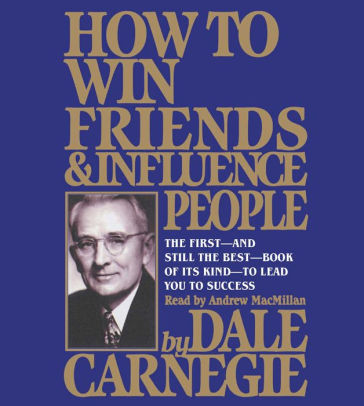
Being a college student, I meet new people all the time. I’ve always been interested in the best way to treat others. I recently finished reading Dale Carnegie’s How to Win Friends and Influence People. This was an eye-opening book. After I finished it, I wasted no time to implement some of its ideas. In this post I’ll be sharing my 4 favorite ideas and experiences I’ve had after incorporating them into my life.
1. Talk about your own mistakes before giving constructive criticism.
When living with roommate’s people are bound to get on each other’s nerves. I first tried this one when one of my roommates left his computer in the walkway of our living room. He has a habit of doing it and all of my other roommates were fed up with it. It gets in the way, and we don’t want to accidentally step on it. So one afternoon I confronted him and started the conversation with a story. I told him about a time when I was little, and I always left my tricycle laying in the driveway instead of putting it away when I was done riding it. The day before my 5th or 6th birthday my mom and I were going shopping for my birthday cake. We backed out of the garage and immediately heard screeching. Both my tricycle and my birthday were ruined. I never left any of my toys out after that. I then asked my roommate to try to keep his computer off the floor because I would hate to see it get broken. After sharing that story with him he has done a much better job of keeping it off the floor.
2. Become genuinely interested in other people.
This point was one of the most surprising ones from the book. Basically, Dale Carnegie explained that people love to talk about themselves. People are ten times more interested in their problems than any one else’s. I took this idea and had a conversation with one of my roommates. My roommate is on the track team and he started talking about practice that day. I started asking questions and we ended up talking for 3 hours about track and field. It was a great conversation and I could tell my roommate loved every minute of it. It was surprising because we had such a long conversation about something he was passionate about. If I wasn’t interested and didn’t ask so many questions it would have lasted two minutes.
3. Remember people’s names.
I am normally poor at remembering people’s names. In this book Dale explains that one of the reasons FDR was so charismatic was because he could greet everyone by name. In attempts to remembers names better I made a note sheet where I write down the names of new people, I meet along with any other information I got from talking with them. I noticed that the second time I would meet someone and greet them by their name they always had to ask for my name again. They also seemed to be more interested in me than if I hadn’t said their name.
4. Speak in terms of other people’s interests.
I was excited to try this one out. For all of the first semester I had been trying to get my roommate to go to the gym. I could tell he was getting annoyed with my nagging. So, after reading this chapter I told my roommate all the benefits of working out. I didn’t bug him about coming with me or ask him when he was going to start going. I simply told him all of the things exercise does for you. Several days later he got home in the late afternoon and I asked him where he had been. He told me he was just at the gym. I don’t know if I was solely responsible, but I feel that using this trick opened his eyes and he could make the decision for himself.
5. The only way to win an argument is to avoid it.
Living with friends can be challenging at times. Spending so much time with each other can occasionally lead to arguments. Dale explained that even if you win an argument you lose. Arguing just makes both parties think they are right and create tension between people. This tension can manifest in ways unrelated to the original argument. The best thing you can do is avoid it altogether. Since reading this book I’ve done my best to avoid arguing and I’ve noticed a more pleasant environment in my apartment.
 Ben's Blog